




Requirements of the EU Ecodesign Directive
In industries where harsh operating conditions and strict sustainability regulations converge, equipment must offer more than just process performance — it must ensure long-term chemical resistance, safety, and environmental compatibility.
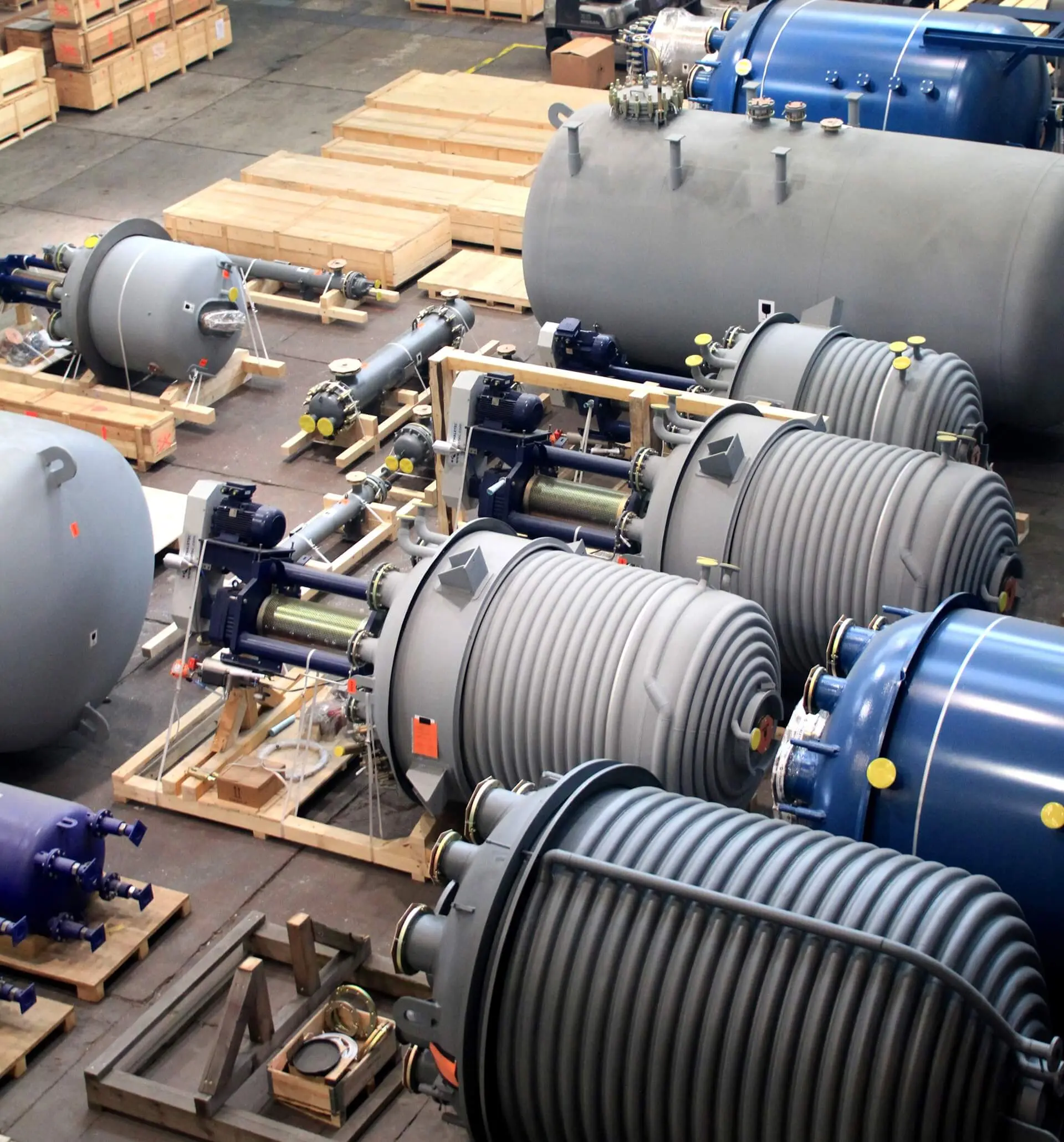
Glass-lined equipment offers a unique combination of corrosion resistance, durability, and low environmental impact. By combining the mechanical strength of carbon steel with the chemical resistance of glass, it achieves an exceptionally low carbon footprint compared to alternative materials used in the chemical and pharmaceutical industries.
Through the European “EU Ecodesign Directive” (ESPR), the EU has established a framework for product sustainability, including repairability, recyclability, energy efficiency, and material safety. This regulation, which is part of the Green Deal’s circular economy strategy, will set binding requirements for specific product groups in the coming years. Glass-lined equipment is well-positioned to meet these requirements and offer proven solutions for reducing energy consumption and operating costs, as well as associated CO₂ emissions, while offering a long service life and high recyclability.
Carbon footprint of chemically highly resistant materials
Process time is the most effective way to achieve significant savings. If this time can be reduced, the energy consumption of drives, pumps, and heating and cooling systems will decrease noticeably. This can be achieved, among other things, using efficient Mixing Technology and Heating Technology in glass-lined reactors (K172, K181).
Energy and raw materials are strategic resources that must be used as efficiently as possible. When it comes to equipment with high chemical resistance, the choice of materials is limited. These include PTFE/PFA-coated equipment and equipment made of tantalum, Hastelloy, zirconium, and glass-lined equipment. The availability, accessibility, and carbon footprint associated with the production of these materials vary significantly!
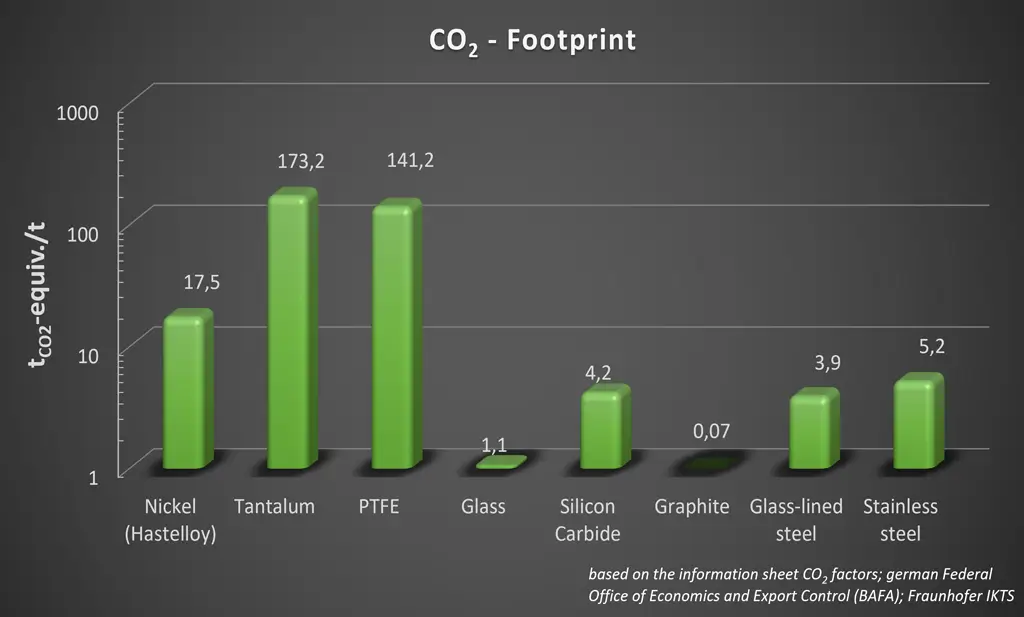
The composite material, consisting of unalloyed steel (carbon steel) and glass/enamel, offers outstanding properties in terms of strength, chemical resistance, and environmental footprint. This becomes even clearer with another product—glass-lined tubes for heat exchangers. The production of one ton of glass-lined tubes (PowerTubes K119) generates only 1.72 tons of CO2. This figure considers the energy requirements and associated CO2 emissions to produce carbon steel, glass frit, and the firing process.
Repairability and recyclability? No problem!
In addition to the energy required to manufacture the materials, glass-lined equipment is also notable for the fact that they can be re-glassed and reused multiple times. Re-glassing and reusing the steel body saves approximately 55 % in energy and CO2 emissions compared to manufacturing a new glass lined equipment (based on a CE16000 reactor).
In most cases, it is also possible to repair glass-lined vessels and equipment directly at the customer’s site, and various repair systems are available on the market. THALETEC offers unique repair systems for different types of damage and repairs “glass-on-glass” (K097). Repairs using tantalum, a conflict material, can be completely avoided. Another environmental benefit!
Glass-lined equipment is also highly recyclable, as they are primarily made of unalloyed steel (“carbon steel”) and enamel (glass).
Steel can be recycled an infinite number of times
Enamel (glass) is a non-critical material
For example, if we consider a glass-lined heat exchanger WTU400/3270-19.6 m² (2-pass), it consists of 95.4 % carbon steel, 0.2 % glass, and 4.4 % PTFE. This results in a very high recycling rate of 95.6 %, which is even higher for glass-lined reactors and storage tanks!
Summary
Glass-lined equipment offers an excellent alternative to competing materials with high chemical resistance. The composite material glass-lined steel combines strength, durability, ease of cleaning, high chemical resistance, and a low carbon footprint. Glass-lined equipment is indispensable in the chemical and pharmaceutical industries and represents a strategic product with easy access to the required raw materials.
Are you also interested in options for designing an energy-efficient glass-lined equipment (K172, K181)? Simply contact us via process@thaletec.com.