




Bottom outlet valves with FireSafe certification – what does that mean?
Bottom outlet valves with FireSafe certification – an added safety feature that makes all the difference
In the chemical and pharmaceutical industries, every second counts when it comes to safety. Especially in the event of a fire, the reliability of valves determines whether people, equipment, and the environment are protected. FireSafe-certified bottom outlet valves address this very need: They ensure a secure seal and functionality even under extreme thermal loads. Products bearing this label have been tested according to strict ISO-standards and must withstand various test scenarios involving extreme thermal loads. But what does this designation mean, and what benefits does it offer operators?
In most cases, FireSafe valves are not mandated by individual state laws, but are often required indirectly through safety regulations, standards, and operator guidelines. Regulatory requirements such as the Hazardous Incident Ordinance (Germany), NFPA (U.S.), or COMAH (U.K.) increasingly call for measures to prevent leaks during a fire – especially when dealing with flammable or toxic substances!
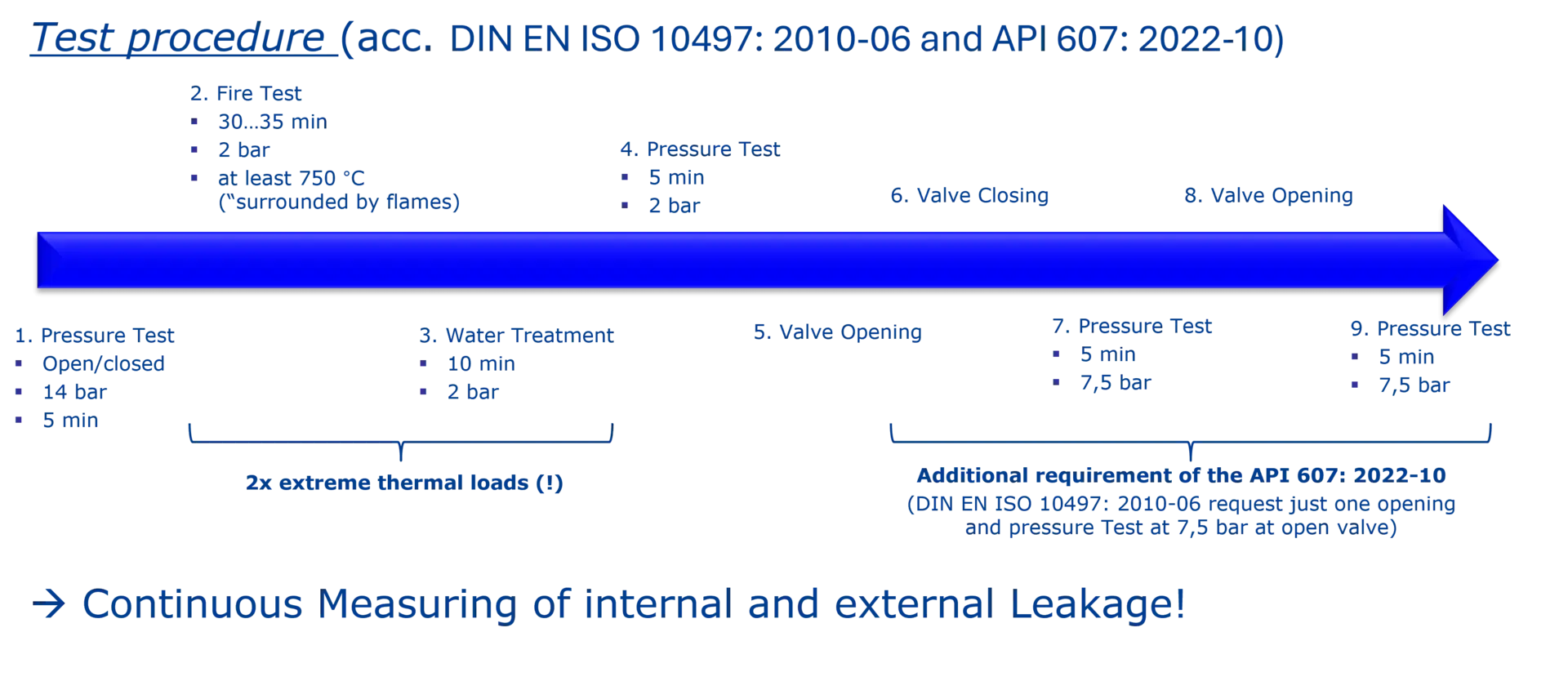
The current standards DIN EN ISO 10497:2024-04 and API 607 2022-10 form the basis for a bottom outlet valve. These standards describe in detail the testing procedures that must be followed and the requirements that the bottom outlet valve must meet. Temperature profiles, times, pressures, leakage rates, and operability, among other factors, are precisely defined. In short, a bottom outlet valve must withstand a fire for at least 30 minutes without internal or external leaks – or, more precisely, without any significant leaks. This is the time the fire fighters need to arrive at the scene and begin extinguishing the fire. These requirements ensure that a valve not only withstands the fire but also functions reliably after a fire – a critical factor for the safe draining of vessels and the resumption of operations.
Requirements according to DIN EN ISO 10497:2024-04 and API 607 2022-10 (excerpt)
If state-of-the-art technology is to be used, care must be taken to ensure compliance with current standards. Older standards, such as BS6755, Part 2 (1987), do not meet these requirements and have been withdrawn. Current standards for bottom outlet valves are DIN EN ISO 10497:2024-04 and API 607 2022-10. These standards require, among other things, stricter leakage limits and the ability to operate the valve after a fire (open-close-reclose), including a definition of leakage, which BS 6755, Part 2 (1987) does not provide, and which only describes a single opening (not a true functional test).
Depending on the target pressure rating, e.g., PN10, strict internal and external leakage limits must be maintained throughout the entire test cycle. Starting with a leak test at 14 bar for 5 minutes, the bottom outlet valve is tested prior to the fire simulation. If the leak test is passed, the fire is ignited so that thermocouples and calorimeters at defined valve locations must reach at least 750 °C within a short time. During this process, the bottom outlet valve must be “enveloped by the flame.” This condition must be maintained for at least 30 minutes. Subsequently, extinguishing with water is simulated, and the bottom outlet valve must return to ambient temperature within 10 minutes (temperature drop) – the second extreme thermal load! During the fire and extinguishing, a pressure of 2 bar is always maintained on the vessel side. After simulating the fire and the simulated fire department response, another pressure test is conducted for 5 minutes at 2 bar to detect any internal or external leaks.
Next, the operability of the bottom outlet valve is tested. Glass-lined bottom outlet valves are self-closing, meaning that in the event of a malfunction (power failure), the valves automatically close. To open the valve after a fire, the pneumatic actuator (assuming the compressed air supply is still intact) or a local control mechanism (emergency handwheel) can be used. DIN EN ISO 10497:2024-04 requires a single opening. API 607 2022-10 additionally requires a further closure, a pressure test at 7.5 bar, a further opening, and another pressure test at 7.5 bar. Even during the operability test, there must be no internal or external leaks, or they must fall within the strict standard limits.
THALTEC PremiumValve FireSafe
The THALETEC PremiumValve FireSafe (K192) has been tested in strict accordance with these current standards and meets all requirements. A special design featuring fire shutters, fire-resistant insulation materials, and high-temperature-resistant secondary gaskets forms the basis for meeting the standard requirements. During normal operation, sealing is provided by PTFE gaskets – ideal for GMP- and FDA-regulated processes.
The THALETEC PremiumValve FireSafe (K192) stands out not only for its compliance with current standards but also for its additional features. Its flat-seat design eliminates dead spaces and allows for complete drainage. Furthermore, the entire bottom outlet valve is electrically conductive and coated with the proven, electrically conductive Condusist (K098). A position sensor, temperature measurement (QuickTip K061), and a CIP connection can also be integrated as options.
- Nominal Sizes: DN80/50, DN100/80, DN150/100 (on request DN200/150)
- Operating pressure: 1/+10 bar (PN10; on request PN16)
- Operating temperature: -60°C/+230°C
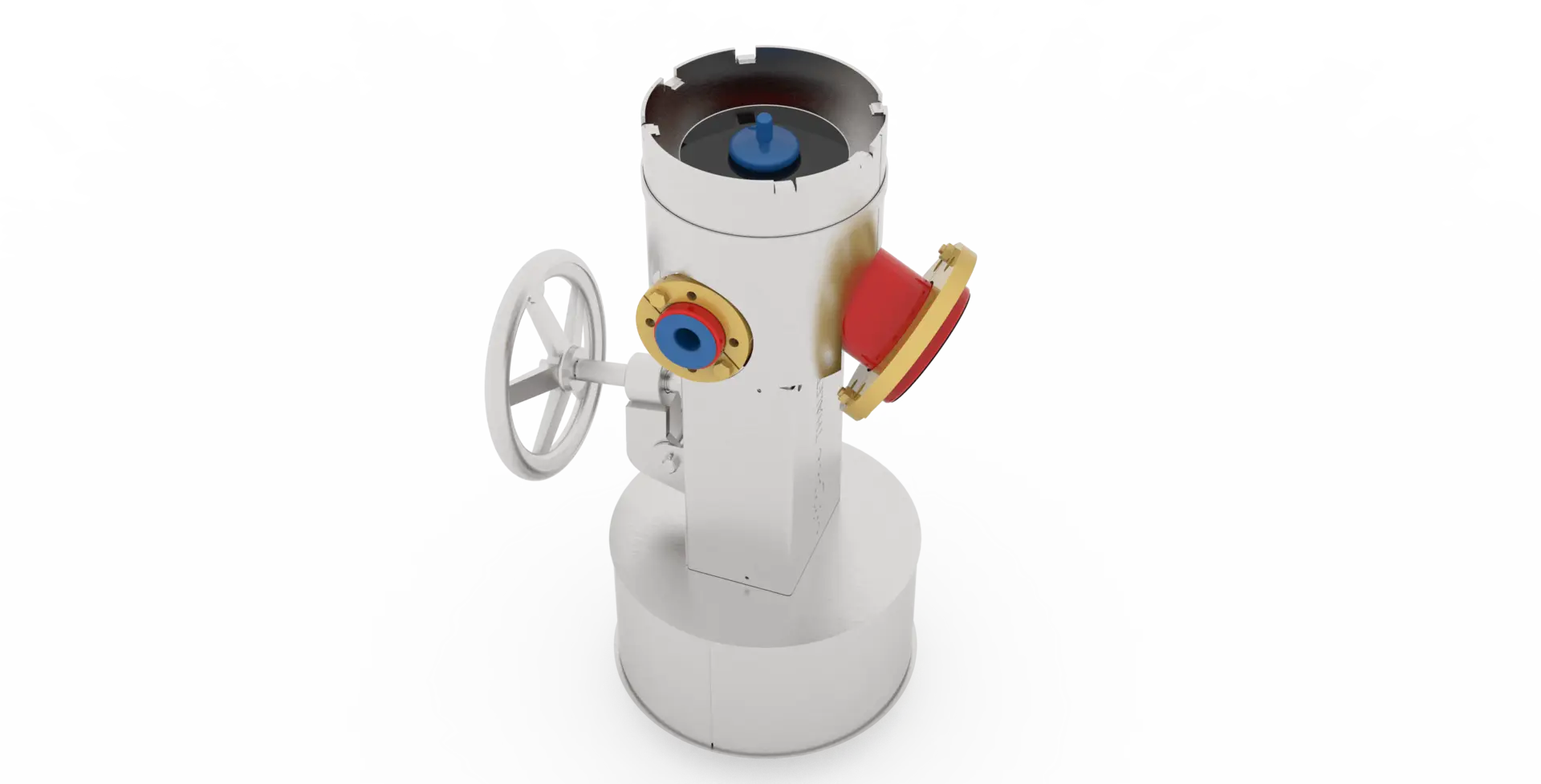
Figure 2: THALETEC PremiumValve FireSafe with integrated QuickTip (K061) for temperature measurement and a DN25 CIP connection
Why Operators Should Choose FireSafe
A FireSafe bottom outlet valve not only provides safety in accordance with standards, but also offers economic benefits:
- Minimization of leakage risks
- Protection against plant downtime
- Compliance with international safety standards
- Future-proof design for demanding processes
The THALETEC PremiumValve FireSafe combines robust safety technology with a process-optimized design – a combination that is crucial in an emergency.
Conclusion
FireSafe-certified bottom outlet valves are an essential component of modern safety systems. The THALETEC PremiumValve FireSafe (K192) sets new standards in this area: It meets the latest standards, offers additional functional benefits, and is optimally tailored to the requirements of the chemical and pharmaceutical industries.
The THALETEC team is always available for further consultation or a customized quote: sales@thaletec.com