




THALETEC UFT and UFX – Scientifically Tested!
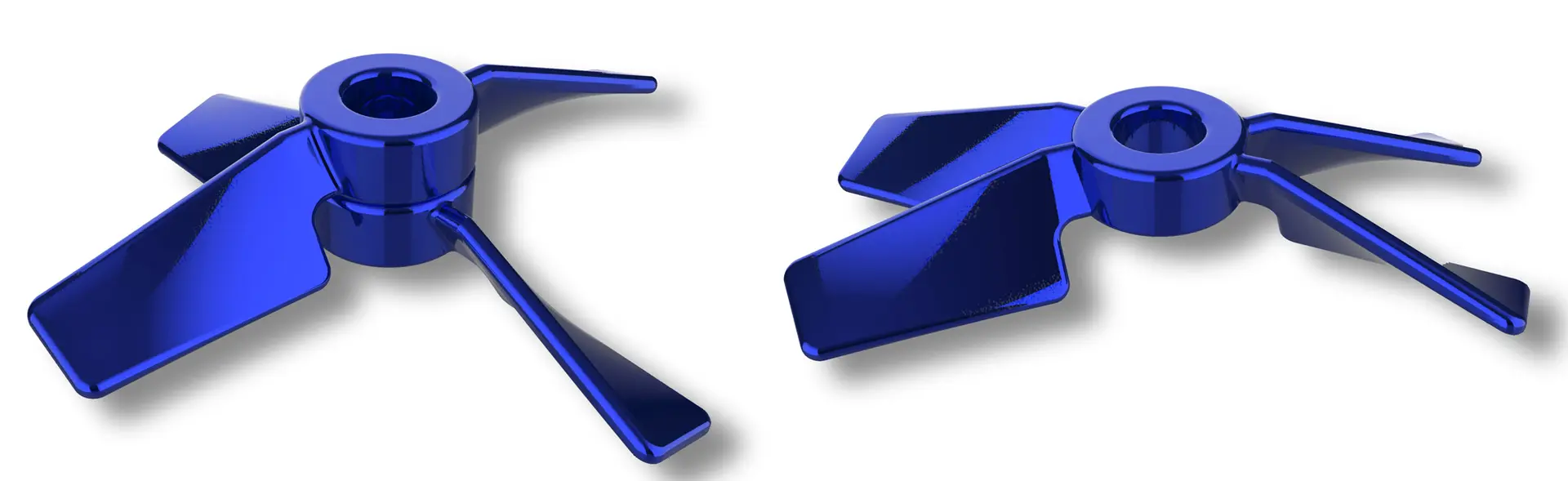
THALETEC UFT & UFX – A New Generation of Axial Turbines
When processes run faster thanks to efficient mixing or heating technology, costs go down – and productivity goes up. That is precisely why THALETEC set itself the ambitious goal in 2021 of developing an axial turbine that redefines efficiency. The result after countless iterations: the UFT/UFX (UltraFlow Turbine) (K173) – a turbine that has been scientifically proven to set new standards.
Even during the development, it was clear that only a radically new design could significantly advance glass-lined mixing technology. Inspired by aerospace and wind power technologies, a blade profile with a continuously variable angle of pitch was designed, generating maximum axial flow with minimal energy consumption. The registered design of the UFT/UFX also fits perfectly with a construction suitable for glass-lining.
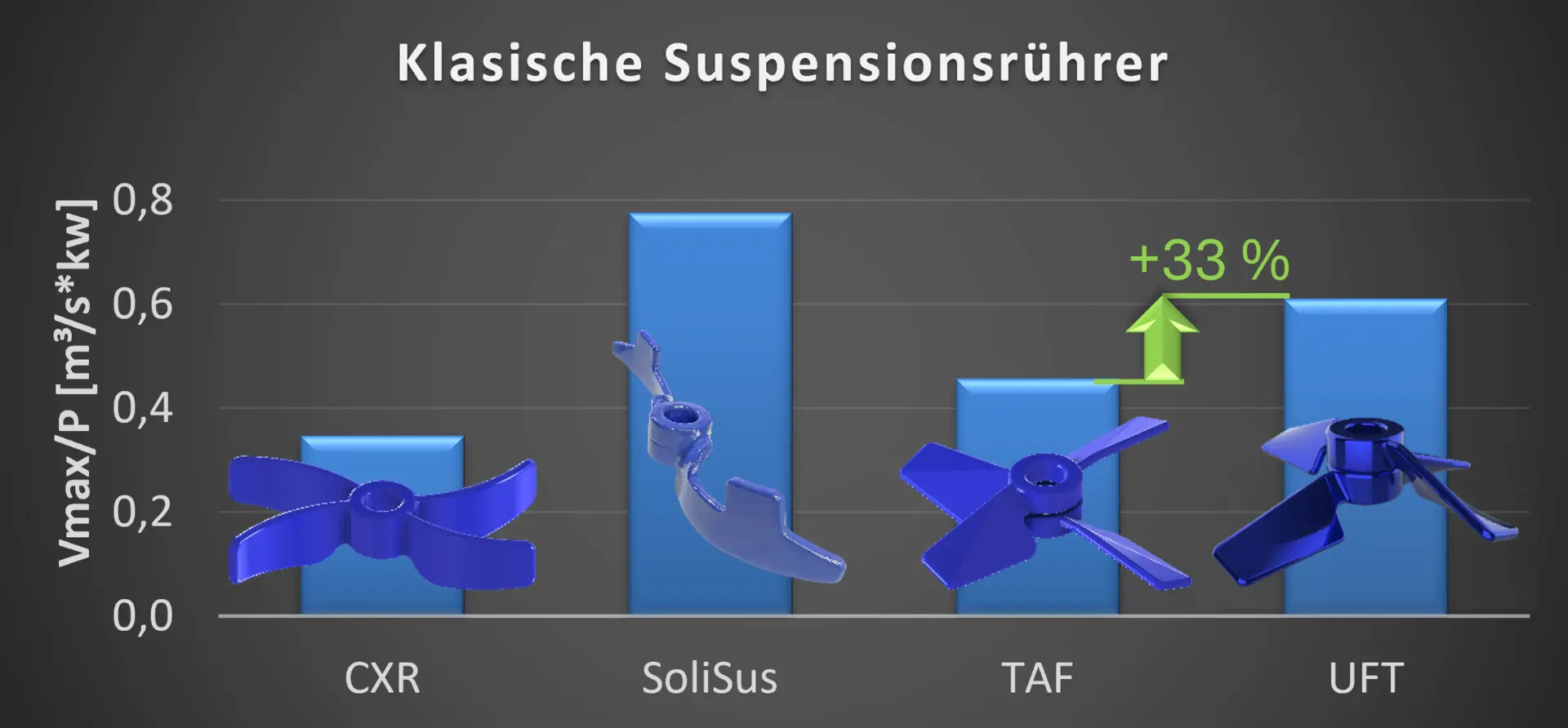
33 % higher volume flow – without additional energy consumption
The UFT/UFX delivers what the modern process industry demands: more efficient mixing technology with the same energy input. CFD simulations and experimental measurements show:
- +33 % flow rate compared to conventional hydrofoil turbines, such as the TAF (K172), with the same turbine diameter
- 100 % axial flow, with no unwanted radial flow
- low Newton/Power number, meaning low power consumption
This makes the UFT/UFX the ideal tool for reducing process times – and thus lowering costs.
A turbine for almost any process – true multipurpose capability
Modern equipment must be flexible. The UFT/UFX was developed and extensively tested precisely for this purpose: flow patterns, pump performance, mixing times, suspension behaviour, and shear effects were analysed both numerically and experimentally.
The results speak for themselves:
- Shorter mixing times thanks to a higher flow rate
- Improved heat transfer between the product and service side
- Efficient particle dispersion in suspension processes
- Low shear effect – ideal for sensitive crystallization processes
This makes the UFT/UFX ideal for multipurpose reactors that need to meet a wide range of process requirements.
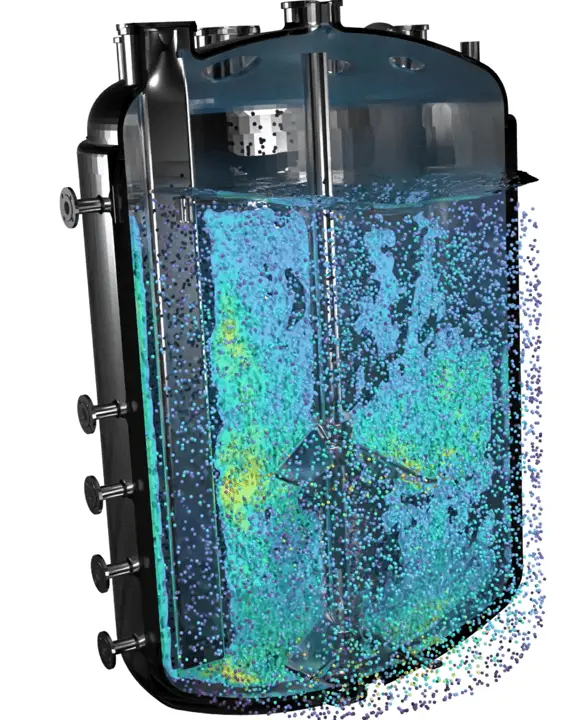
Figure 2: CFD simulation of a two-stage mixing system with UFT in a suspension process
Scientifically proven
As part of the publicly funded IGF project “MISS” (“Multi-Stage Stirrers” (22782 N/1)), multi-stage stirring systems were investigated at the Niederrhein University of Applied Sciences. In addition to conventional turbines such as impellers, pitched-blade turbines, and 6-blade disc turbines (Rushton-Turbine), the UFX was also included in the measurement program.
Using state-of-the-art methods such as LIF (laser-induced fluorescence) and PIV (Particle Image Velocimetry), actual flow patterns and mixing times were measured. These similar to known flow patterns from a CFD simulation but have actually been measured! To establish a basis for comparison, all turbine types were adjusted for turbine diameter so that each turbine in each stage has the same power input. The results are intriguing and will enrich the state of the art and the literature. Regarding the UFX, it was experimentally demonstrated that shorter and more defined mixing times can be achieved compared to, for example, a pitched-blade turbine. The results are clearly presented in a published poster ((PDF) Experimental Characterization: Flow Fields and Mixing Dynamics of UFX Turbines).
Conclusion: Efficiency that pays off
The UFT/UFX meets its development goals! Independent studies confirm:
- shorter processing times
- reduced or stable operating costs
- wide range of applications
- scientifically proven performance
If you're looking to modernize your glass-lined mixing technology, the UFT/UFX is the way to go.
Interested?
Would you like to know how the UFT/UFX (K173) can speed up your processes, or do you need a mixing system design? Contact us at process@thaletec.com.
For more information on THALETEC mixing technology, please refer to the Theme Poster: mixing technology (K172) or to MixView, the interactive tool for comparing single-stage and two-stage mixing systems.